Introduction – What Makes Hatha Yoga So Powerful?
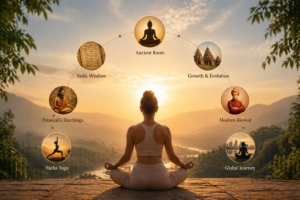
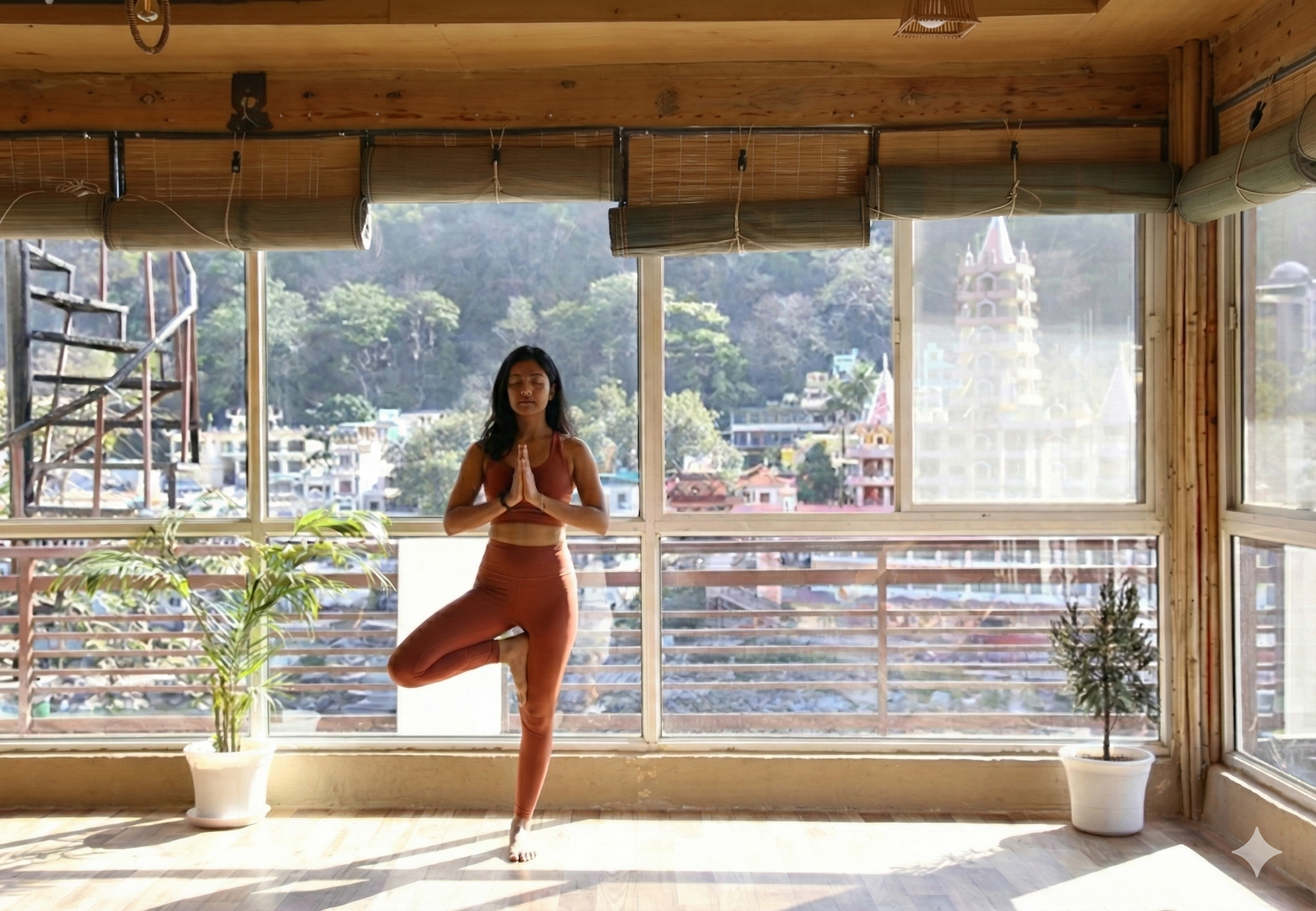
Looking to improve flexibility, reduce stress, and gain inner peace? The ancient practice of Hatha Yoga in Rishikesh might be the perfect answer. It is a discipline that transcends mere physical activity, offering a sophisticated methodology for harmonizing the disparate elements of human existence. Practiced for centuries in sacred spiritual epicenters like the city of Rishikesh, nestled in the foothills of the Himalayas, Hatha Yoga benefits people of all ages, body types, and fitness levels. Its power lies in its deliberate, mindful approach, which addresses the root causes of modern ailments—from postural imbalances caused by desk-bound work to the chronic nervous system overstimulation of a hyper-connected world. Whether you’re a complete beginner seeking a gentle introduction to yoga or an advanced practitioner looking to refine your internal awareness, incorporating the principles of Hatha Yoga into your daily routine can be a truly transformative endeavor, fostering a resilient body, a tranquil mind, and a deeper connection to the self.
Part I: Deconstructing Hatha Yoga – Philosophical Foundations and Core Principles
To truly appreciate the benefits of Hatha Yoga, one must first understand its rich theoretical framework. It is not an arbitrary collection of postures but a precise science developed over millennia to explore the full potential of the human system.
What is Hatha Yoga? The Union of Opposing Forces
Hatha Yoga is a classical and traditional branch of yoga that aims to achieve a state of balance and purification in the body and mind, creating a suitable vessel for higher states of consciousness. The very word “Hatha” () is a profound philosophical concept encapsulated in two Sanskrit syllables. It is a compound of “Ha” (
), representing the sun, and “Tha” (
), representing the moon.
These are not merely celestial bodies but potent symbols for the primary dualities that govern our existence:
- ‘Ha’ (The Sun): This represents the solar, active, and masculine energies within us. It is associated with the
, an energetic channel running along the right side of the spine, which governs the sympathetic nervous system—our “fight or flight” response. It relates to vital physical energy, heat, extroversion, and the logical, analytical functions of the left brain hemisphere.
- ‘Tha’ (The Moon): This represents the lunar, receptive, and feminine energies. It is associated with the
, an energetic channel along the left side of the spine, which governs the parasympathetic nervous system—our “rest and digest” response. It relates to mental and psychic energy, coolness, introversion, and the creative, intuitive functions of the right brain hemisphere.
Therefore, Hatha Yoga is the science of uniting these two opposing forces. The practice aims to balance the flow of life-force energy, known as , through these two channels. When the solar and lunar energies are in perfect equilibrium, the
is guided into the central energetic channel, the
, which runs through the core of the spinal cord. According to yogic physiology, this is the pathway for the awakening of
, the dormant spiritual energy at the base of the spine, leading to higher states of awareness and self-realization (
).
This sophisticated understanding of human energy dynamics is the bedrock of the practice. Every posture (), every breathing technique (
), and every energy lock (
) is designed with the specific intention of balancing the solar and lunar currents.
Historical Lineage and Foundational Texts
While the principles of yoga are ancient, Hatha Yoga as a systematic practice was codified in several key medieval texts. These texts distinguish Hatha Yoga as a preparatory path for Raja Yoga (the “royal path” of meditation outlined in Patanjali’s Yoga Sutras). According to the Yoga Alliance, Hatha Yoga is fundamental to understanding other forms of yoga and is ideal for practitioners at every level because it provides this essential groundwork.
The three most influential texts are:
- The Hatha Yoga Pradipika (Svatmarama, c. 15th Century CE): Often considered the definitive manual on Hatha Yoga, this text outlines the practice in a clear, step-by-step manner. Svatmarama presents Hatha Yoga not as an end in itself, but as a staircase to Raja Yoga. He details a specific hierarchy of practices: Asana (postures), Pranayama (breath control), Mudra & Bandha (gestures and energy locks), and finally, Nadanusandhana (listening to the inner sound) as a gateway to Samadhi.
- The Gheranda Samhita (Gheranda, c. 17th Century CE): This text is presented as a dialogue between the sage Gheranda and his disciple Chanda Kapali. It is more encyclopedic than the Hatha Yoga Pradipika and describes a seven-fold path to perfection, emphasizing purification. The steps are: Shatkarma (six cleansing acts), Asana (for strength), Mudra (for steadiness), Pratyahara (sense withdrawal), Pranayama (for lightness), Dhyana (meditation), and Samadhi (the state of absorption).
- The Shiva Samhita (Author Unknown, c. 17th-18th Century CE): This text takes a more philosophical and metaphysical approach, discussing esoteric anatomy, the nature of consciousness, and various methods for liberation. It emphasizes that even a householder can achieve liberation through the practice of yoga and describes 84 classic asanas.
These texts collectively illustrate that Hatha Yoga was never intended to be a simple workout. It is a profound internal science designed to purify the body, stabilize the mind, and awaken the dormant spiritual potential within.
Part II: Top Hatha Yoga Benefits – A Scientific Review of Somatic and Physiological Impacts
While rooted in ancient philosophy, the benefits of Hatha Yoga are now being rigorously validated by modern scientific and medical research. The slow, mindful, and precise nature of the practice initiates a cascade of positive changes throughout the body’s interconnected systems.
1. The Musculoskeletal System: Forging Flexibility, Strength, and Structural Integrity
Hatha Yoga’s most visible benefits are on the physical frame. It systematically works to restore the body’s natural alignment, strength, and range of motion, making it an ideal antidote to both a sedentary lifestyle and the repetitive strains of athletic activity.
- Enhanced Flexibility and Joint Mobility: Flexibility is not merely about stretching muscles; it’s about the health of our entire connective tissue matrix, including ligaments, tendons, and fascia. The practice of holding asanas for extended periods (typically 30 seconds to a few minutes) creates a safe and sustained stress on these tissues. This process, known as viscoelastic creep, encourages the collagen fibers within the connective tissue to realign and lengthen over time. Studies published in the International Journal of Yoga have consistently shown that regular yoga practice significantly improves spinal flexibility, hamstring length, and shoulder range of motion. This is crucial for preventing injuries, reducing chronic pain (especially in the lower back), and maintaining functional mobility as we age.
- Development of Functional Strength and Endurance: Hatha Yoga builds a unique kind of strength that is both functional and integrated. Unlike weightlifting, which often isolates specific muscle groups, asanas require multiple muscle groups to work in synergy. Poses like Chaturanga Dandasana (Four-Limbed Staff Pose) and Virabhadrasana (Warrior Poses) involve isometric contractions, where muscles are engaged without changing length. This builds exceptional endurance and stability. Furthermore, Hatha Yoga places a strong emphasis on core strength—not just the superficial abdominal muscles, but the deep stabilizing muscles of the trunk, including the transverse abdominis and multifidus. A strong core is fundamental for spinal health, proper posture, and efficient transfer of power throughout the body, making it ideal for desk workers and active individuals alike.
- Postural Re-education and Body Alignment: Chronic slouching over desks and devices leads to a predictable pattern of postural dysfunction: tight pectoral muscles, weak upper back muscles (rhomboids and trapezius), and a forward-head posture. Hatha Yoga directly counteracts this. Poses like Bhujangasana (Cobra Pose) and Salabhasana (Locust Pose) strengthen the posterior chain, while chest-opening poses like Ustrasana (Camel Pose) and Matsyasana (Fish Pose) stretch the tight muscles of the chest and shoulders. The practice cultivates a deep sense of proprioception (the body’s awareness of itself in space), allowing practitioners to identify and correct misalignments, leading to a more graceful, efficient, and pain-free posture.
2. The Respiratory System: The Science of Breathing and Vitality
Breathing is the most fundamental process of life, yet most people use only a fraction of their lung capacity. Hatha Yoga places a central focus on the breath through the science of pranayama, which serves as a bridge between the physical body and the mind.
- Improved Lung Capacity and Respiratory Efficiency: Pranayama techniques are essentially a form of respiratory muscle training. Practices like Dirga Pranayama (Three-Part Breath) train the practitioner to utilize the full capacity of the lungs by engaging the diaphragm, the primary muscle of respiration. Most people are “chest breathers,” relying on the smaller intercostal muscles. Diaphragmatic breathing is more efficient, requiring less effort and leading to a fuller exchange of air. Research has demonstrated that yogic breathing can significantly increase key respiratory parameters such as Vital Capacity (the maximum amount of air a person can expel) and Forced Expiratory Volume (FEV1), a measure of lung power.
- Enhanced Oxygenation and Cellular Detoxification: Incorporating pranayama, Hatha Yoga helps boost oxygen levels in the blood, enhancing the function of every cell in the body. Deeper, more efficient breathing improves the oxygen-carbon dioxide exchange in the alveoli of the lungs. This not only enhances vitality and energy levels but also plays a role in detoxifying the body. The lymphatic system, a crucial part of our immune system that removes metabolic waste, does not have a central pump like the cardiovascular system. It relies on deep breathing and muscular movement for circulation. The rhythmic expansion and contraction of the diaphragm during pranayama act as a powerful lymphatic pump. Our Meditation and Pranayama Classes go deeper into these breathing practices for more focused benefits, exploring techniques that can energize, calm, or balance the system at will.
3. The Neuro-Endocrine Axis: Masterful Stress Reduction and Mental Calm
Perhaps the most sought-after benefit of Hatha Yoga in the modern world is its profound ability to mitigate stress and calm the mind. This effect is not merely psychological; it is a direct physiological consequence of the practice’s influence on the nervous and endocrine systems.
- Regulation of the Autonomic Nervous System (ANS): The combination of posture and breath work directly stimulates the parasympathetic nervous system (PNS), our “rest and digest” mode. Slow, deep, and rhythmic breathing, a hallmark of Hatha Yoga, activates the vagus nerve, the primary nerve of the PNS. This acts as a biological brake on the sympathetic nervous system’s “fight or flight” response. The result is a cascade of calming effects: a lower heart rate, reduced blood pressure, and improved digestion.
- Modulation of the HPA Axis and Cortisol Reduction: As Harvard Health highlights, yoga is proven to relieve stress and enhance mental clarity. Chronic stress leads to the over-activation of the Hypothalamic-Pituitary-Adrenal (HPA) axis, resulting in elevated levels of the stress hormone cortisol. Persistently high cortisol is linked to a host of health problems, including anxiety, depression, weight gain, and immune suppression. A wealth of studies, including those published in the journal Psychoneuroendocrinology, have shown that regular yoga practice leads to a significant reduction in baseline cortisol levels, helping to recalibrate the body’s stress response.
- Boosting “Calm” Neurotransmitters: Research using advanced neuroimaging has revealed another fascinating mechanism. A 2010 study from Boston University School of Medicine found that a single session of yoga increased levels of the neurotransmitter GABA (gamma-aminobutyric acid) in the brain. GABA is the brain’s primary inhibitory neurotransmitter; its function is to calm down nerve activity. Low levels of GABA are associated with anxiety and mood disorders. By naturally increasing GABA, Hatha Yoga acts like a tranquilizer, reducing anxiety and improving emotional stability without side effects.
4. Cardiovascular and Immune Health: A Foundation for Longevity
The calming effects on the nervous system and improved circulation create a powerful positive feedback loop that benefits both the heart and the immune system.
- Boosting Heart Health: Hatha Yoga’s multi-pronged approach offers significant cardiovascular protection. By down-regulating the sympathetic nervous system, it directly contributes to lower blood pressure and reduced resting heart rate. Furthermore, studies have shown that yoga practice improves Heart Rate Variability (HRV), a key indicator of cardiovascular health and resilience to stress. Better HRV signifies a more adaptable and responsive nervous system. The practice also improves circulation as the sequence of contracting and releasing large muscle groups helps to pump blood more effectively back to the heart, reducing the load on the cardiovascular system.
- Strengthening the Immune System: The link between chronic stress and a weakened immune system is well-established. High cortisol levels suppress the activity of key immune cells. By effectively managing stress, regular Hatha Yoga can contribute to a stronger and more robust immune response. Research is also beginning to show a more direct effect. A study from UCLA found that yoga practices can reduce the levels of pro-inflammatory cytokines, such as Interleukin-6 (IL-6), which are involved in chronic inflammation—a root cause of many modern diseases. With its calming effects on the nervous system and improved circulation and lymphatic flow, regular Hatha Yoga can be a powerful ally in building a resilient immune system.
Part III: The Psycho-Spiritual Dimension: Hatha Yoga as the Gateway to Meditation
While the physical and physiological benefits are substantial, in the classical tradition they are considered valuable side effects. The primary, original purpose of Hatha Yoga is to prepare the practitioner for the deeper, more subtle practice of meditation (). Hatha Yoga is a doorway to deeper spiritual practice, systematically addressing the common obstacles that prevent a state of quiet introspection.
Preparing the Vessel: Sthira Sukham Asanam
Patanjali’s Yoga Sutra 2.46 defines asana as “Sthira Sukham Asanam”—the posture should be steady and comfortable. This simple aphorism holds the key to Hatha Yoga’s preparatory role. For most people, the primary obstacle to meditation is the body itself. Within minutes of sitting still, the mind is flooded with physical distractions: an aching back, numb legs, a stiff neck, or an incessant urge to fidget.
Hatha Yoga systematically purifies and strengthens the body, transforming it from a source of distraction into a stable and comfortable seat.
- Overcoming Physical Restlessness (
): The asanas work to release deep-seated muscular tension and correct postural misalignments that cause pain and discomfort during prolonged sitting. By developing core strength, opening the hips, and increasing spinal flexibility, the practice allows the body to maintain an upright, effortless posture for longer periods without strain or restlessness.
- Balancing the Flow of Prana: The yogic texts state that physical restlessness is a manifestation of erratic or blocked
. The combined practice of asana and pranayama purifies the energetic channels (
), allowing
to flow smoothly. When energy is balanced and flowing freely, the physical body naturally becomes still and calm.
Taming the Mind: From Gross to Subtle Awareness
The second great obstacle to meditation is the wandering mind (). Our minds are habituated to constantly flit from thought to thought, from past regrets to future anxieties. Hatha Yoga provides a powerful training ground for mental discipline.
- Developing One-Pointed Concentration (
): Holding a challenging asana requires total concentration. The practitioner must focus intently on the physical sensations, the alignment of the body, and the rhythm of the breath. This act of sustained attention pulls the mind away from its habitual discursive thinking and anchors it firmly in the present moment. Each posture becomes a mini-meditation in itself, a laboratory for observing the mind’s tendencies and gently guiding it back to a single point of focus.
- The Bridge of the Breath: The ancient yogis discovered a profound link: “Chale Vate Chalam Chittam”—as the breath moves, so moves the mind. A short, erratic, and shallow breath corresponds to an agitated and anxious mind. A long, smooth, and deep breath leads to a calm and focused mind. Pranayama is the direct method for influencing the mental state by regulating the breath. By gaining conscious control over the breath, the practitioner gains influence over the mind’s fluctuations, making the transition into a meditative state feel natural and effortless.
The physical postures and breath work of Hatha Yoga meticulously prepare the body and mind to sit longer and meditate without restlessness. This integrated approach is a core principle we integrate in our Spiritual Yoga Retreat in Rishikesh, designed to help you systematically move from the gross physical realm to the subtle inner landscape and reconnect with your inner self.
Part IV: Modern Practice – The Rishikesh Lineage in a Global World
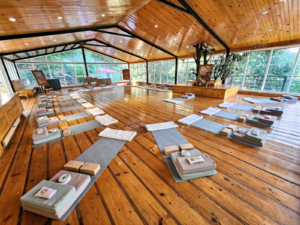
The authenticity and potency of a yoga practice are often tied to its source. Rishikesh, revered as the “World Capital of Yoga,” is a place where the energy of this ancient tradition is palpable. Situated on the banks of the sacred river Ganges and cradled by the Himalayas, it has been a sanctuary for sages, yogis, and spiritual seekers for millennia. Learning in such an environment offers an immersion that transcends the physical practice.
However, the wisdom of the Rishikesh lineage is no longer confined by geography. Technology now allows for the authentic transmission of this timeless knowledge across the globe.
📍 Practice Hatha Yoga Online from Rishikesh
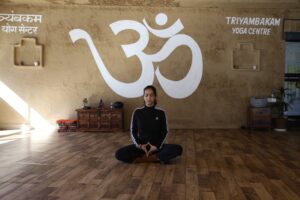
Can’t travel to India? No worries. At Triyambakam Yoga Centre, based in the heart of Rishikesh, we are committed to bridging this gap. We offer daily live online Hatha Yoga classes to students across India and around the world. Our mission is to ensure that anyone, anywhere, can access high-quality, traditional yoga instruction directly from its source. You can experience the same energy, teachings, and lineage—the same meticulous attention to alignment, breath, and inner awareness—all from the comfort of your home. Our online platform provides interactive sessions where you receive personalized guidance and become part of a global community dedicated to authentic practice.
This is your invitation to begin this journey. Start by experiencing the practice for yourself.
📲 Book a Trial Online Class Today
Part V: Deepening the Path – From Dedicated Practitioner to Inspired Teacher
As your practice deepens, a natural desire may arise not only to continue your own evolution but to share the profound benefits of Hatha Yoga with others. This marks the transition from student to teacher—a path of greater responsibility, deeper study, and immense fulfillment.
🧘 Want to Deepen Your Practice?
If you’re inspired by the transformative potential of Hatha Yoga, the next logical step is a comprehensive immersion into its theory and practice. We invite you to consider our certified Yoga Teacher Training in Rishikesh. This is more than a course for learning how to instruct; it is a life-altering journey into the heart of yoga. You’ll dive deeper into the nuances of asanas, the science of pranayama, the wisdom of yogic philosophy from foundational texts like the Yoga Sutras and the Bhagavad Gita, the intricacies of human anatomy and physiology, and the art of teaching methodology—all guided by experienced Indian teachers who embody the living tradition of yoga. This immersive experience provides the tools, knowledge, and confidence to share this powerful practice with integrity and authenticity.
📌 Conclusion: A Practice for a Lifetime
The benefits of Hatha Yoga extend far beyond the mat. It is a comprehensive system for enhancing human potential on every level. Through the mindful integration of movement and breath, it builds a body that is strong, flexible, and resilient. By calming the nervous system and balancing the endocrine response, it cultivates a mind that is clear, focused, and emotionally stable. And by preparing the entire system for stillness, it opens a gateway to the deeper spiritual dimensions of our being.
With regular and dedicated practice, you gain not only physical strength but also a profound sense of inner equilibrium and spiritual clarity that permeates every aspect of your life. It teaches you to navigate challenges with grace, to listen to the wisdom of your body, and to find a sanctuary of peace within yourself, regardless of external circumstances. Whether you are beginning your journey with a trial class online or committing to an immersive teacher training in the sacred atmosphere of Rishikesh, our programs are designed to help you experience the full spectrum of Hatha Yoga benefits and to support you every step of the way on this path of self-discovery and transformation.