
Today, millions of people around the world practice yoga for health, peace, flexibility, and stress relief. Some people use yoga to stay fit, while others use it to calm the mind. Yet many still ask one important question — what is the History of Yoga and Its Origin?
The History of Yoga and Its Origin is a deep and inspiring story that began in ancient India thousands of years ago. Yoga did not begin only as physical exercise. It started as a complete path for creating balance between body, breath, mind, and spirit.
When we understand the History of Yoga and Its Origin, yoga becomes more meaningful. Every pose, breath, and moment of stillness feels connected to a long tradition of wisdom. Let us explore this journey in simple language.
Early Beginnings in Ancient India
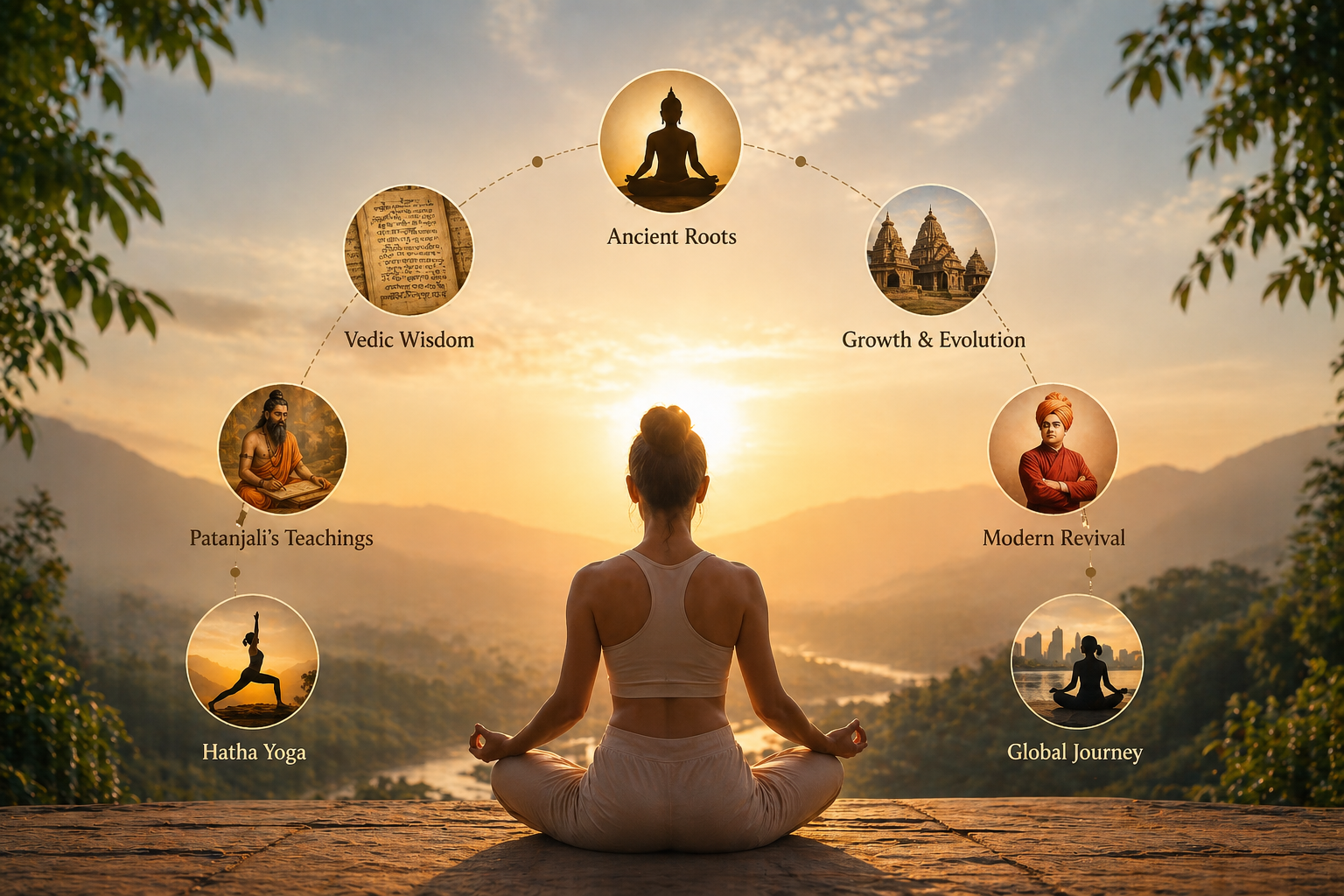
The History of Yoga and Its Origin goes back more than 5,000 years. Many historians connect yoga’s earliest roots to the Indus Valley Civilization. Archaeologists discovered ancient seals showing seated figures in meditative positions. These findings suggest that people were already practicing forms of meditation and body awareness.
Even in those early times, people wanted peace, discipline, and a deeper understanding of life. This desire became the foundation of yoga.
The word Yoga comes from Sanskrit and means “to join,” “to unite,” or “to yoke.” It represents the union of body and mind, human life and higher consciousness.
Main Stages of Yoga History
| Period | Time Frame | Key Development |
|---|---|---|
| Pre-Vedic | Before 3000 BCE | Early meditation signs |
| Vedic | 1500 BCE onwards | First written references |
| Pre-Classical | 800–200 BCE | Upanishads and Gita teachings |
| Classical | 200 BCE–400 CE | Patanjali Yoga Sutras |
| Post-Classical | 800–1700 CE | Hatha Yoga development |
| Modern | 1800s onwards | Global yoga movement |
Yoga in the Vedic Period
A major chapter in the History of Yoga and Its Origin began during the Vedic period. The sacred texts known as the Vedas contain some of the earliest references to yoga.
At that time, yoga was connected with prayer, breath discipline, concentration, and rituals. People believed these practices helped them connect with natural forces and divine energy.
Later, spiritual texts called the Upanishads taught that true happiness comes from inner peace rather than outside success.
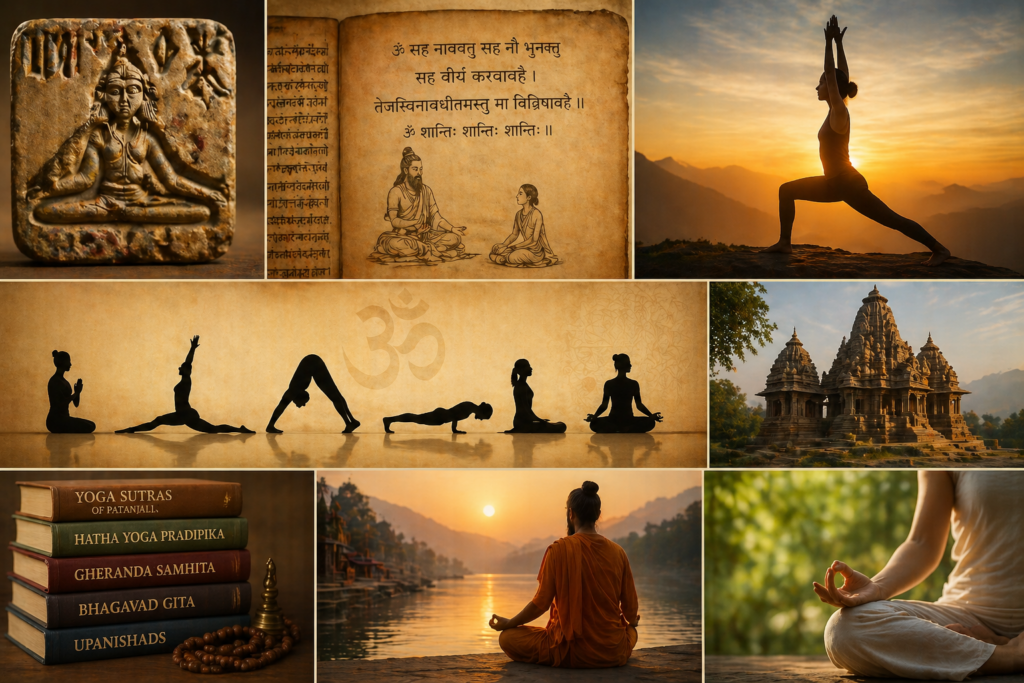
The famous Bhagavad Gita also played a powerful role in the History of Yoga and Its Origin. It explained three major paths of yoga:
- Karma Yoga – yoga through selfless action
- Jnana Yoga – yoga through wisdom and knowledge
- Bhakti Yoga – yoga through love and devotion
These teachings showed that yoga could fit different personalities and lifestyles.
Patanjali and Classical Yoga
One of the most important names in the History of Yoga and Its Origin is Patanjali.
He organized older teachings into a famous text called the Yoga Sutras, which became one of the most respected books on yoga philosophy.
Patanjali defined yoga as calming the movements of the mind. He taught that when the mind becomes quiet, a person experiences clarity and peace.
He also described the Eight Limbs of Yoga, a complete guide for living.
Eight Limbs of Yoga
- Yama – moral values
- Niyama – self-discipline
- Asana – physical posture
- Pranayama – breath control
- Pratyahara – turning inward
- Dharana – concentration
- Dhyana – meditation
- Samadhi – deep peace and awareness
This system became a key pillar in the History of Yoga and Its Origin and continues to guide yoga students today.
Rise of Hatha Yoga
During the medieval period, yoga entered a new phase called Hatha Yoga. This part of the History of Yoga and Its Origin focused more on the body, breath, and energy.
Hatha Yoga emphasized physical postures, cleansing methods, and breathing techniques. The idea was simple: when the body becomes healthy and balanced, the mind can become calmer.
Important teachers of this era included:
- Matsyendranath
- Gorakhnath
Important books from this time include:
| Text | Time Period | Main Focus |
|---|---|---|
| Hatha Yoga Pradipika | 15th Century | Postures and breath |
| Gheranda Samhita | 17th Century | Cleansing and discipline |
Many yoga poses practiced today developed from this important stage in the History of Yoga and Its Origin.
Yoga in Modern Times
The modern chapter of the History of Yoga and Its Origin began in the 19th century.
Swami Vivekananda introduced yoga philosophy to the Western world in 1893 at the Parliament of Religions in Chicago. His message of unity, strength, and inner growth inspired many people.
Later, T. Krishnamacharya trained famous students who spread yoga worldwide:
- B. K. S. Iyengar
- Pattabhi Jois
Because of these teachers, yoga moved from traditional ashrams in India to studios, homes, schools, and wellness centers around the world.
Today, yoga is practiced for:
- Better posture
- Flexibility
- Mental peace
- Better breathing
- Stress relief
- Healthy lifestyle
Why Yoga History Still Matters Today
Learning the History of Yoga and Its Origin helps us understand that yoga is much more than exercise.
Yoga teaches balance in every part of life.
| Ancient Teaching | Modern Benefit |
|---|---|
| Meditation | Less stress |
| Breath control | Calm emotions |
| Asanas | Strong body |
| Kindness | Better relationships |
| Discipline | Better focus |
When people know yoga’s roots, they practice with greater respect and awareness.
Easy Way to Start Yoga Today
If you are a beginner, you can start simply:
- Practice gentle stretching daily
- Learn slow deep breathing
- Sit quietly for five minutes
- Stay regular and patient
- Focus on progress, not perfection
The History of Yoga and Its Origin shows that yoga was always meant to support daily life.
Who invented yoga?
Yoga was not invented by one person. It developed over thousands of years in ancient India.
How old is yoga?
Yoga is believed to be more than 5,000 years old.
Who is called the father of yoga?
Patanjali is often called the father of classical yoga.
Is yoga only exercise?
No. Yoga includes movement, breathing, meditation, discipline, and inner growth.