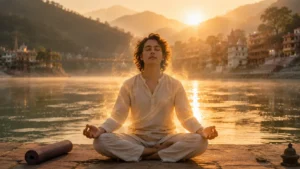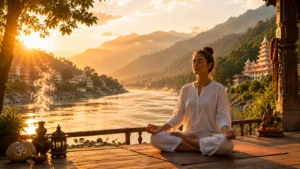

Seekers from over 70 countries have sat in the practice hall at Triyambakam Yoga Centre in Tapovan, Rishikesh, and each one has felt the same thing within the first few days — that Hatha yoga in Rishikesh is not what they were practising at home. Not because they were doing it wrong. But because here, the practice has roots. It has a lineage, a living teacher, and a land behind it that holds centuries of unbroken yogic energy. That difference is what people come to Rishikesh for, and it is exactly what Triyambakam was built to transmit.
Hatha yoga in Rishikesh is not a fitness method. It is a science — precise, methodical, and built on the knowledge of the human system that the yogic tradition has refined across thousands of years. At Triyambakam Yoga Centre, founded and led by Prof. Anamika, this science is taught as it was always meant to be taught: not as performance, but as practice. Not as exercise, but as inner work that changes the practitioner from within.
What Hatha Yoga Actually Means
The word Hatha is drawn from two Sanskrit syllables. Ha stands for the sun — the active, solar, masculine force within the human system. Tha stands for the moon — the receptive, lunar, feminine force. Hatha yoga is the science of bringing these two opposing energies into balance. Where there is imbalance — physical, mental, energetic — disease, agitation, and dullness arise. Where there is balance, clarity, strength, and stillness follow naturally.
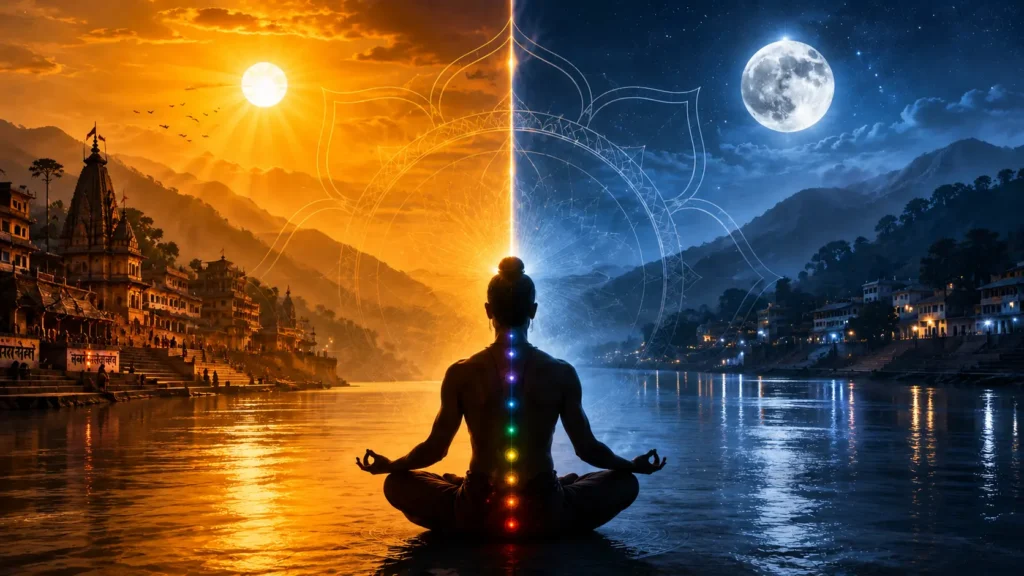
Classical Hatha yoga is built on six pillars: asana (posture), pranayama (breath regulation), shatkarma (internal cleansing), mudra (energetic gestures), bandha (energy locks), and samadhi (meditative absorption). These are not separate practices — they are stages of a single systematic process. The asanas purify and prepare the physical body. Pranayama clears the nadis, the subtle energy channels. The shatkarmas cleanse the organs and digestive system. Mudras and bandhas direct prana to where it is needed. Meditation is the fruit that all of this preparation makes possible. This is Hatha yoga in Rishikesh as it is taught at Triyambakam — not one limb, but all of them, working together.
Why Rishikesh and Nowhere Else
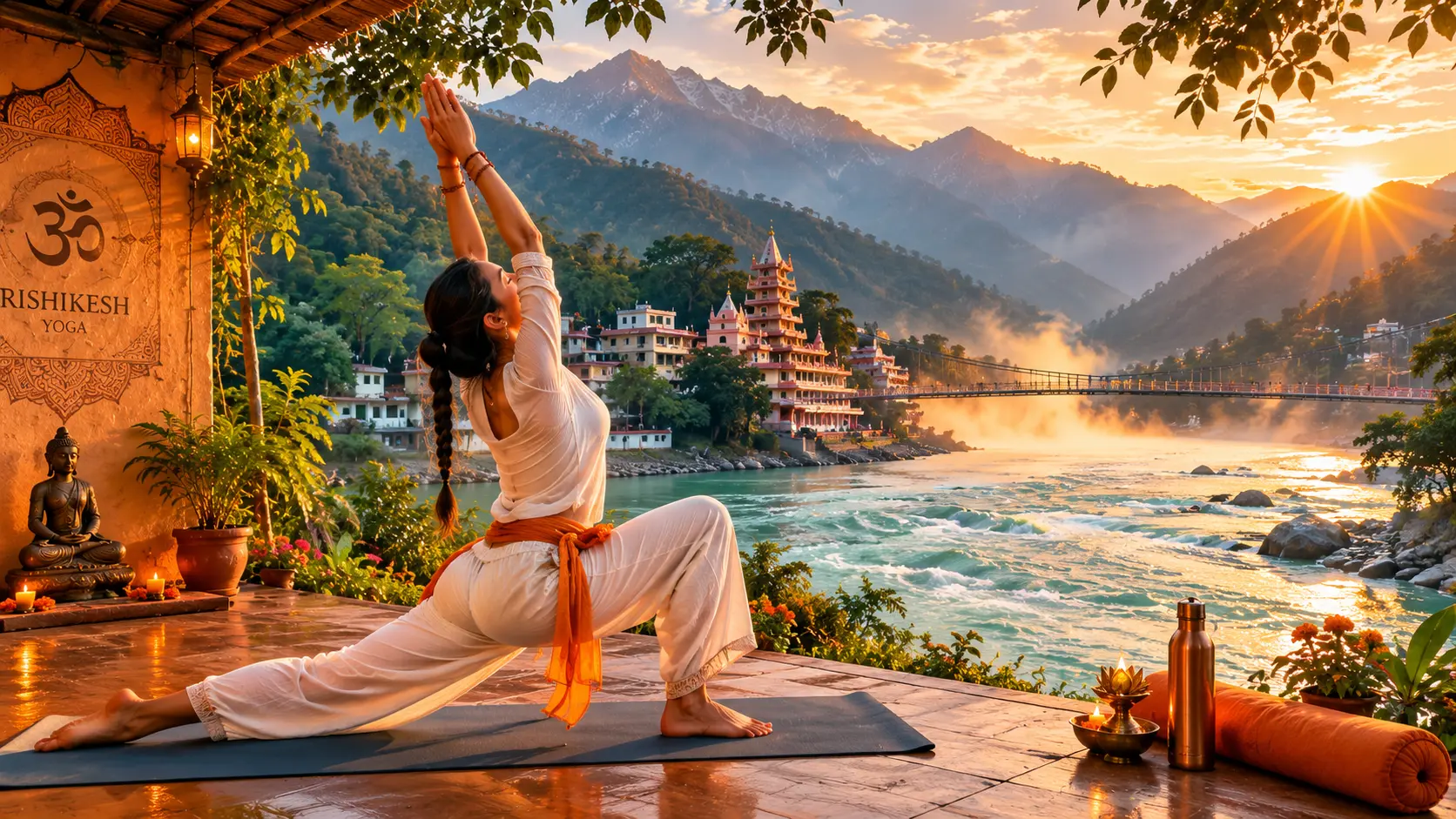
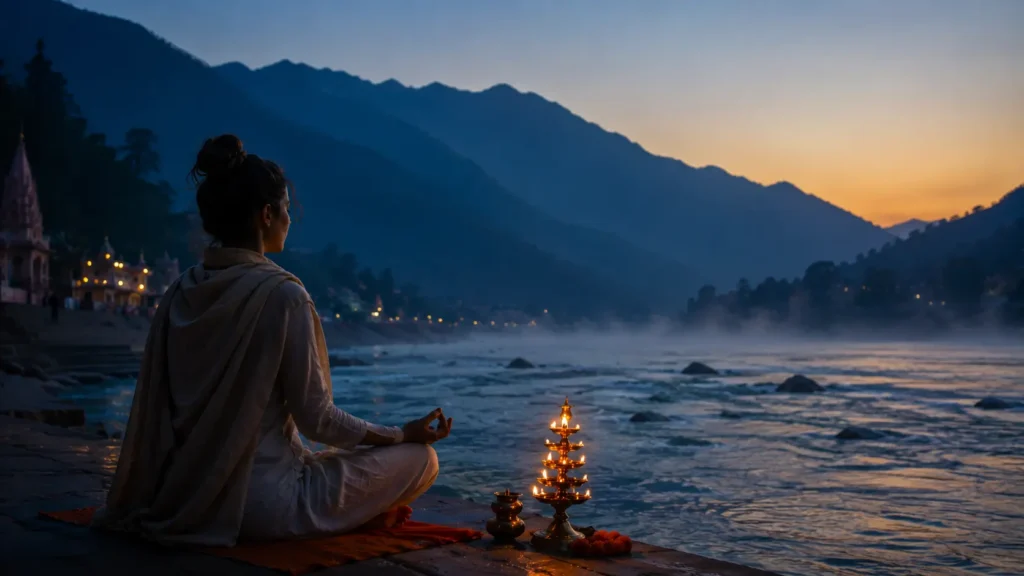
Rishikesh sits where the Ganga descends from the Himalayas into the plains of northern India. The mountain air is thin and clear. The river runs cold and fast. The evenings carry the sound of aarti bells from the ghats. And beneath all of it, invisible but unmistakable to any serious practitioner seeking Hatha Yoga in Rishikesh, is an energetic quality that the tradition calls sattvic — pure, still, and conducive to inner work. This is not poetic language. It is an accurate description of what practitioners experience when they sit to meditate or practice asana in Rishikesh for the first time.
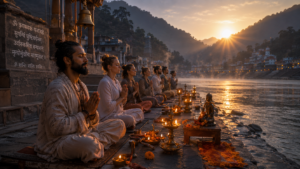
The yogic tradition has been alive in this region for an uninterrupted period that predates any written record. The sages and rishis who developed and transmitted the practices of Hatha yoga chose this land deliberately. Rishikesh is also where the Ganga aarti has been performed every evening at the ghats for longer than anyone can trace — a living continuation of the same Vedic current from which Hatha yoga emerged. Practising Hatha yoga in Rishikesh means practising within that current, not simply learning about it from a book.
Hatha Yoga Styles Taught at Triyambakam Yoga Centre
| Style | Duration | Best For | Intensity |
| Classical Hatha | 60–90 mins | Beginners & All Levels | Gentle to Moderate |
| Ashtanga Hatha | 90 mins | Advanced Practitioners | High |
| Hatha-Kundalini Fusion | 75 mins | Spiritual Seekers | Moderate |
| Yin Hatha | 60 mins | Stress Relief & Flexibility | Low to Gentle |
Hatha Yoga Teacher Training in Rishikesh at Triyambakam
The most in-depth way to study Hatha yoga in Rishikesh at Triyambakam is through the internationally certified Teacher Training programme. Offered at 100, 200, and 300-hour levels, the curriculum is built on the Yoga Alliance framework while going deeper into the classical tradition than most programmes anywhere in the world. Students who come expecting a certification course frequently say, by the end, that the certification was the least significant thing they received.
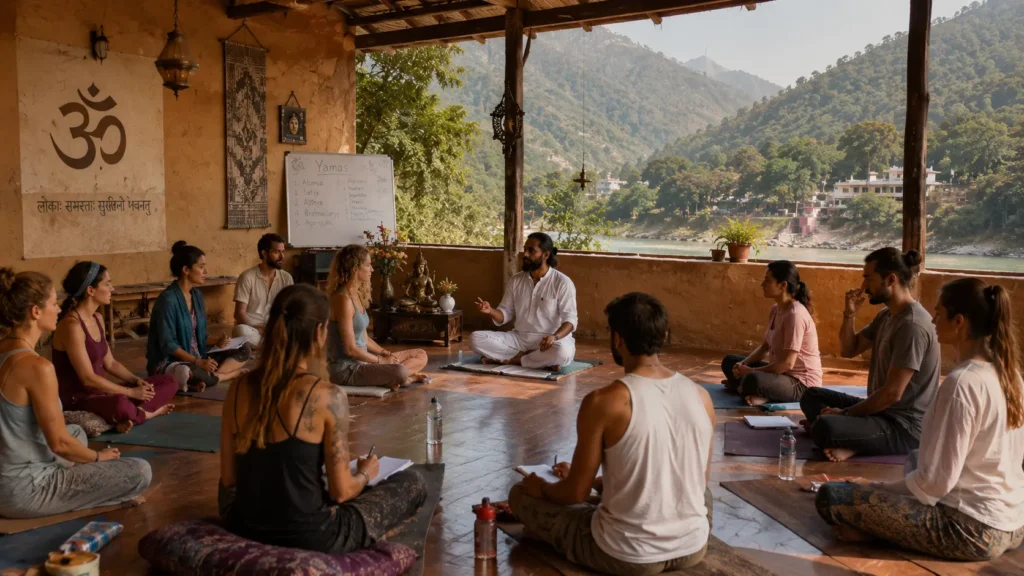
The programme covers asana practice with precise alignment and adjustment work, pranayama from the primary classical texts, mantra chanting and Sanskrit pronunciation, the Yoga Sutras of Patanjali and the Hatha Yoga Pradipika, human anatomy taught through the lens of yogic physiology, yoga nidra and meditation, and practical teaching methodology. The training does not rush. Each concept is given the space it needs, and each student is met where they are. This is Hatha yoga in Rishikesh as a lived process — not a syllabus to be checked off.
Programmes at Triyambakam: Duration and Certification
| Course | Duration | Certification |
| 100-Hour Hatha Yoga TTC | 2 Weeks | Yoga Alliance Registered |
| 200-Hour Hatha Yoga TTC | 4 Weeks | International RYT-200 |
| 300-Hour Advanced TTC | 4 Weeks | International RYT-500 |
| 7-Day Hatha Yoga Retreat | 1 Week | Certificate of Completion |
| 14-Day Yoga Retreat | 2 Weeks | Certificate of Completion |
What Sets Triyambakam Apart from Other Yoga Centres in Rishikesh
Prof. Anamika was born in Odisha, the sacred land of the Shakti Peethas, and her approach to Hatha yoga carries the influence of that lineage — a practice that honours both the rigour of classical asana and the depth of the feminine, devotional current within the tradition. Through her teaching of Hatha Yoga in Rishikesh, students at Triyambakam do not simply receive sequences to memorise. They are taught to feel the practice from the inside — to notice how each asana shifts the breath, how the breath shifts the mind, and how the mind, when still, opens into something that cannot be named but can be experienced.
The physical space at Tapovan, near Lakshman Jhula, supports this depth in ways that are hard to explain before arrival and obvious the moment one walks in. The traditional mud-walled practice hall maintains a natural temperature and an earthy grounding that concrete buildings cannot replicate. The proximity to the Ganga means that early morning walks to the river are part of the daily rhythm, not a weekend excursion. The surrounding forests and mountain views create a sensory environment that constantly returns the practitioner’s attention to the present moment — which is, after all, what Hatha yoga in Rishikesh is fundamentally asking of us.
When to Come to Rishikesh for Hatha Yoga
| Season | Months | Weather | Best For |
| Spring | March – May | Pleasant, 15–28°C | Outdoor Yoga & Retreats |
| Post-Monsoon | September – November | Fresh & Serene, 12–25°C | Deep Practice & TTC |
| Winter | December – February | Cool, 8–18°C | Intensive Programmes |
| Monsoon | June – August | Rainy, Lush Green | Indoor Practice & Meditation |
The Daily Schedule: How a Day of Hatha Yoga in Rishikesh Actually Runs
One of the most powerful aspects of an immersive stay at Triyambakam is the restructuring of the entire day around the rhythms of the practice. The classical yogic texts prescribe waking before dawn during the brahma muhurta — the two hours before sunrise when the quality of the atmosphere is most sattvic, most conducive to meditation and pranayama. At Triyambakam, this is not a suggestion. It is the natural pull of the schedule, and within three days, students find that they are waking before the bell without needing an alarm.
| Time | Activity | Purpose |
| 5:30 AM | Morning Bell & Pranayama | Energise body, awaken breath |
| 6:00 AM | Hatha Yoga Asana Practice | Strength, flexibility & alignment |
| 8:00 AM | Sattvic Breakfast | Nourish the body with clean energy |
| 9:30 AM | Philosophy & Anatomy Class | Deepen theoretical knowledge |
| 12:30 PM | Lunch & Rest | Integrate morning practice |
| 4:00 PM | Evening Hatha / Kundalini Session | Balance energy channels (nadis) |
| 6:00 PM | Ganga Aarti or Mantra Chanting | Connect with Vedic tradition |
| 7:30 PM | Sattvic Dinner & Silence | Calm the nervous system for deep sleep |
Students who maintain this schedule for even a single week consistently report the same set of changes: deeper sleep, sharper mental focus during waking hours, a noticeable reduction in reactive thinking, and a quality of inner stillness that carries into their activities throughout the day. This is Hatha yoga in Rishikesh working as it was designed to work — not as a sixty-minute class isolated from the rest of life, but as a framework that reorders the entire daily rhythm around the cultivation of inner balance.
Hatha Yoga Retreats in Rishikesh for Rest and Renewal
Not everyone who comes to Triyambakam is ready for the intensity of a Teacher Training programme, and the centre holds space for that too. The 7-day and 14-day Yoga Retreat in Rishikesh programmes at Triyambakam are built for practitioners who need to step out of the pace of their ordinary lives and return to something quieter. The retreat schedule is less intensive than the training — it creates space for stillness rather than filling every hour with curriculum.
Each retreat day includes a morning session of Hatha yoga and pranayama, guided meditation, Ayurvedic meals prepared by the centre’s kitchen, an afternoon session on yoga philosophy or sound healing, and evening kirtan or mantra near the Ganga. There is also deliberate free time — space to sit with the river, to walk in the Tapovan forests, to read, to rest, or simply to do nothing in a place where doing nothing is not laziness but practice. Hatha yoga in Rishikesh at the retreat level is a different kind of teaching. It teaches through quiet rather than through content.
Who This Practice Is For
Triyambakam does not have a particular type of student. The community that forms within each cohort is strikingly varied — retired teachers from Europe sitting next to twenty-five-year-old software engineers from Bangalore, long-time practitioners alongside people who have never unrolled a yoga mat before. What they share is not experience or background. It is the quality of attention they bring. The centre works for people who come sincerely, regardless of what they already know or how their body is shaped or what brought them to Hatha yoga in Rishikesh in the first place.
Complete beginners are accommodated with patient, individualised attention. Experienced practitioners are challenged to go deeper than they have gone before. Aspiring teachers receive the technical depth and teaching practice hours that a genuine certification requires. And those who arrive at a turning point in their lives — carrying grief, burnout, or simply a feeling that something essential has been missing — often find that the practice, the place, and the community together provide something that they could not have articulated before arriving but recognise immediately as what they needed.
Common Questions About Hatha Yoga in Rishikesh
People often ask whether a certain level of physical fitness is required before arriving. It is not. Classical Hatha yoga is not an athletic pursuit — it works from wherever the practitioner is, and the tradition has never required a particular body type or level of flexibility as a prerequisite. The practice itself produces the physical changes; the practitioner does not need to produce them first.
Another frequent question is how Hatha yoga in Rishikesh differs from what is available in a city yoga studio. The difference lies primarily in three things: the depth of the philosophical framework that sits behind every asana and pranayama instruction, the lineage from which the teaching flows rather than a single teacher’s interpretation, and the integration of the full classical system — pranayama, meditation, mantra, shatkarma — alongside the physical practice. Most city studios offer one or two of these elements. The classical tradition that Triyambakam holds offers all of them, together, in the environment where the tradition originated.
Students also ask about the language of instruction. All programmes at Triyambakam are taught in English. Pre-existing physical conditions are assessed individually, and modifications are provided as needed — the classical tradition has always worked with the individual rather than applying a single template to every practitioner.
Hatha Yoga in Rishikesh Has Been Waiting
There is a point in the practice of Hatha yoga in Rishikesh at Triyambakam where a practitioner stops thinking about yoga and starts living it. The postures stop being shapes to achieve and become conversations between the body and the breath. The pranayama stops being a breathing exercise and becomes a direct experience of prana moving through the system. The meditation stops being effortful and becomes what naturally remains when all the effort falls away. This is not a promised outcome. It is simply what the practice does when it is given the right conditions — authentic transmission, a qualified teacher, a sacred land, and a student who shows up fully. Triyambakam Yoga Centre in Tapovan, Rishikesh, holds all of those conditions. The student brings themselves. The rest follows.
To book a free one-week trial class, enquire about upcoming Teacher Training dates, or know more about retreat programmes, contact Triyambakam Yoga Centre at +91 8006335555 or reach out through the contact form on this website. The centre is located near Lakshman Jhula, Tapovan, Rishikesh, Uttarakhand 249192.